
Hair Thinning in Peri-Menopause: Why It Happens & How Extensions Can Help?
A Modern Editorial Guide for Women Navigating Change with Strength and Style.
There is a quiet shift that happens in perimenopause, subtle at first, then increasingly visible. Hair that once felt familiar begins to behave differently. It loses density. It loses volume. The texture changes. The silhouette softens.
For many women, this transformation appears in the mirror long before they recognize it in their hormones. It arrives as a gentle thinning that doesn’t feel like loss, but rather like an unraveling of what once felt effortlessly “you.”
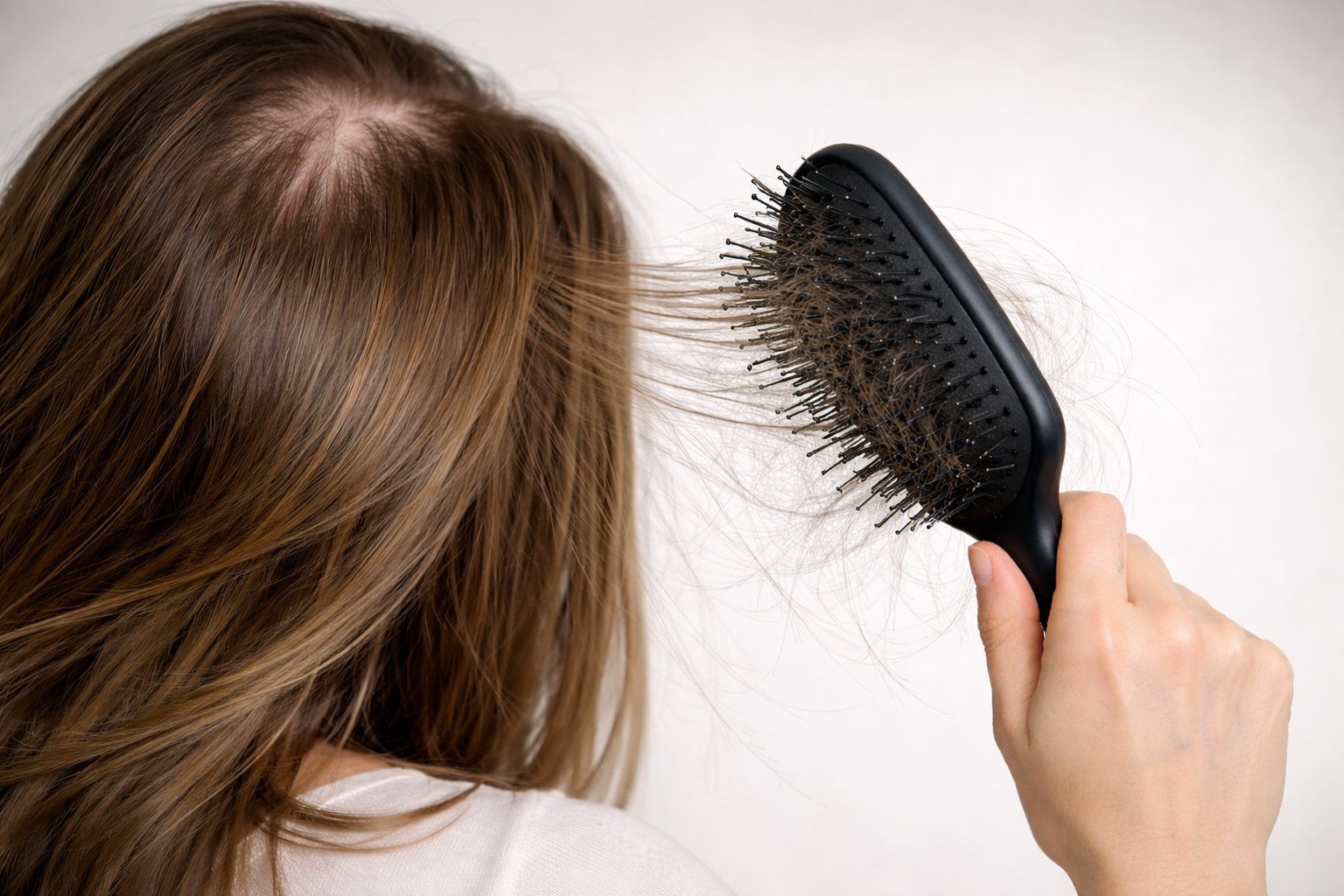
Peri-menopause affects everyone differently, yet hair thinning is one of the most universal experiences of this transition. And while it is a natural biological shift, it often carries emotional weight. Hair has always been more than strands, it’s tied to identity, expression, and confidence.
When it changes, women naturally look for clarity:
Why is this happening, and is there a way to restore what feels like mine?
This article brings together science, empathy, and design, offering a minimal, clean, editorial explanation of peri-menopausal hair thinning and highlighting how modern, lightweight hair extensions (particularly keratin fusion or k-tip extensions) can support both appearance and self-confidence without disrupting the natural hair beneath.
The goal is not to mask change, but to navigate it with intention.
Understanding Peri-Menopause: A Shift in Hormones, A Shift in Hair
Peri-menopause refers to the transitional years leading up to menopause. During this phase, hormone levels fluctuate rather than decline steadily, creating irregularities that affect everything from mood to metabolism to hair.
Hair is especially sensitive to hormonal change. These fluctuations influence the speed, strength, and cycle of growth, resulting in patterns that women recognize intuitively: widening part lines, shorter regrowth, increased shedding, or a general softening of density.
1. The Growth Cycle Contracts
Estrogen’s role in hair is subtle but essential. It keeps follicles in their growth phase longer, allowing strands to become full, strong, and consistent. As estrogen decreases, hair spends less time growing and more time shedding.
This doesn’t create bald spots, instead, it produces diffuse thinning, the kind that is easily visible when styling or washing.
2. Regrowth Is Finer and More Fragile
Most women still grow hair at a normal rate, but the calibre of each strand becomes finer. The hair may feel lighter, softer, or more delicate.
This is not imagined, follicle activity truly shifts during peri-menopause, creating thinner regrowth even without excess shedding.
3. Texture Becomes Less Predictable
Changes in oil production, follicle shape, and hydration levels cause hair to behave differently. Some women experience increased dryness; others experience frizz or a change in curl pattern. Hair that once held shape easily may suddenly resist styling.
4. Stress Magnifies the Cycle
Peri-menopause can heighten stress sensitivity. Stress itself is a known contributor to shedding. Combined with hormonal volatility, this can create a loop: shedding triggers anxiety; anxiety triggers more shedding.
Understanding these shifts does not eliminate the emotional impact, but it gives women a sense of control, the first step in moving forward with confidence.
Why Many Extension Methods Aren’t Ideal for Thinning Hair
When hair becomes finer or more fragile, not all extension methods are suitable. Peri-menopausal thinning requires a gentler, more intelligent approach, something that supports the natural hair instead of overwhelming it.
Tape-Ins: Flat but Not Flexible Enough
Tape-ins lie close to the scalp and are popular for medium-density hair. But because the panels are pre-sized, their weight cannot be adjusted. On thinning hair, adhesive strips can slip, pull, or create stress along the root.
Tape-ins require enough hair to conceal the panel entirely, something peri-menopausal thinning sometimes compromises.
Wefts & Sew-Ins: Too Much Weight in Too Few Places
Wefts add dramatic volume but rely on anchor points. Whether sewn or beaded, they concentrate weight along specific rows. For hair experiencing hormonal thinning, this concentration often exceeds what the follicles can comfortably support.
The method is not inherently harmful, it is simply mismatched to the need.
Beads / Micro-Rings / Nano-Links: Hardware That Requires Stability
These methods attach hair using tiny metal or silicone-lined rings. They can be gentle when installed correctly, but beads require dense enough hair to grip securely.
On thinning hair, beads may rotate, rub, or become visible, particularly near the temples or crown, where peri-menopausal thinning commonly appears.
Clip-Ins & Halos: Safe for Occasional Wear, Not Daily Support
These temporary systems offer flexibility without commitment. But because they sit on the surface of the hair and rely on pressure, they do little to restore daily density. For women wanting consistent fullness, temporary systems feel more like accessories than solutions.
Peri-menopausal thinning does not require dramatic volume, extreme length, or heavy installations. It requires balance, something that feels natural, moves naturally, and protects the scalp while providing emotional relief.
Why Keratin Fusion (K-Tip) Extensions Are Ideal for Peri-Menopausal Hair Health
Keratin fusion — also known as k-tip extensions or keratin bond extensions, has become one of the most respected methods in luxury extension work. Its strength lies in precision, adaptability, and softness, qualities that align perfectly with the needs of peri-menopausal clients.
Here are the reasons keratin fusion is widely considered one of the healthiest extension methods for thinning hair:
1. Micro-Bond Customisation for Fragile Roots
Each keratin bond can be shaped, split, or refined to match the density of the natural hair. This precision allows the stylist to create bonds so lightweight that they support the hair without straining it. For thinning areas, micro-bonds are transformative.
2. Distributed Weight = Less Tension
Unlike wefts or tapes, which rely on wide attachment zones, keratin fusion distributes weight across hundreds of individual strands. The tension is soft, balanced, and gentle — ideal for hair experiencing hormonal sensitivity.
3. Natural Movement That Mimics Real Hair
One hallmark of hair thinning is reduced movement. The hair behaves differently because it has less weight and density. Keratin fusion restores movement by blending seamlessly into the flow of the natural hair. Because each strand moves independently, the result looks and feels indistinguishable from what’s real.
4. Clean, Controlled Removal
Keratin bonds dissolve with a professional remover that breaks down the bond without breaking the hair. No tugging. No adhesive residue. No friction-based removal. This is essential for maintaining long-term scalp health.
5. Precision Placement Around Thinning Zones
Thinning typically occurs around the temples, crown, and part line. Keratin fusion allows strategic placement that lifts, softens, and reshapes the silhouette without compromising the follicles beneath.
6. Emotional Restoration Through Subtle Enhancement
Peri-menopause can alter self-perception. Extensions, when subtle and refined, return a sense of self — not by covering change, but by supporting confidence through it.
Extensions Don’t Cause Damage. Incorrect Installation Does
A common concern among peri-menopausal women is the fear that extensions will worsen thinning. This is an understandable worry, but a misdirected one.
Healthy extension wear depends on:
Correct method selection
Appropriate bond sizing
Thoughtful weight distribution
Gentle placement patterns
Maintenance on schedule
Proper removal
Keratin fusion earns its reputation as a healthy method because it offers maximum control in all these categories. The method protects hair when performed by someone who treats each installation like a custom design, not a mechanical process.
When extensions cause issues, it is rarely the bonds themselves. It is the mismatch between the method and the client’s density or the absence of thoughtful craftsmanship. Technique matters as much as technology.
How Extensions Help During Peri-Menopause — Beyond Aesthetics
Hair thinning during peri-menopause is not merely cosmetic. It touches identity, confidence, and emotional balance. Extensions can support more than appearance; they can support well-being.
Here’s how:
1. Restoring the Silhouette
Most thinning affects shape, not just density. Extensions help rebuild the structure and contour of the hair, creating lift where the hair has flattened.
2. Reducing Daily Styling Stress
Thinning hair often requires more manipulation to look “finished.” Extensions provide built-in structure, allowing women to step away from constant heat styling.
3. Creating a Safety Net for Confidence
Knowing the hair looks fuller, more even, and more consistent relieves psychological pressure. This lightens the emotional load and restores ease.
4. Helping Women Recognise Themselves Again
One of the most profound benefits is the simplest: extensions can restore familiarity — the feeling of looking like oneself again.
5. Supporting Natural Growth
By protecting fragile ends and limiting breakage, extensions can give the natural hair a gentler environment to grow.
A Trichology-Informed Approach: How Confide Hair Designs Healthy Extensions
At Confide Hair, the philosophy is straightforward: hair health is not optional — it is foundational. Every installation is designed around biological understanding, not shortcuts.
1. Hair & Scalp Analysis
Before extensions are considered, the scalp is assessed, follicles are examined, and elasticity is tested to understand strength and tolerance.
2. Custom Bond Creation
Keratin tips are shaped by hand — not used straight out of a factory pack. This ensures weight, tone, and texture align with the client’s natural hair.
3. Strategic Placement That Protects Follicles
Bonds are placed with meticulous spacing, tension control, and density mapping. Thinning zones are enhanced safely, not stressed.
4. Guidance for Hormonal Hair Care
Clients receive education on scalp health, washing methods, sleeping habits, and maintenance routines that support both the extensions and the natural hair.
5. Clean Removal & Responsible Reinstallation
No rushing. No shortcuts. The removal process is as careful as the installation — ensuring long-term safety.
Complementary Solutions: Beyond Extensions
While extensions provide immediate visual support, peri-menopause may also benefit from complementary approaches such as:
Balanced nutrition: protein, iron, vitamin D
Scalp massage to stimulate circulation
Hydration-focused haircare
Low-tension styling habits
Stress management practices
Consultation with a healthcare provider
Extensions can be part of a holistic strategy, not the replacement for one.
A Reminder: You’re Not Losing Yourself — You’re Evolving
Peri-menopause brings change, but it also brings clarity. Women often discover new strengths, priorities, and expressions during this phase. Hair thinning is one part of the journey — not the definition of it.
Extensions, when thoughtfully crafted, help bridge the gap between who you were and who you are becoming. They honour both.
Explore Healthy, Subtle Support at Confide Hair Extensions
Contact or Book With Confide Hair Calgary
If you’re navigating peri-menopausal hair thinning and want a solution that protects the health of your natural hair while restoring soft, believable fullness, a consultation at Confide Hair is the ideal first step.
Whether you’re exploring keratin bond extensions, precision volume enhancement, or long-term density strategies, you’ll receive guidance grounded in expertise, respect, and thoughtful design.
Book your consultation in Calgary today and rediscover hair that feels like you, strong, natural, and beautifully supported.
